Known, unknown, and estimated
- Known: the protocol definition, schedule version, and accurately logged events.
- Unknown: missing events, exact individual exposure, and clinical conclusions.
- Estimate: adherence, runway, and remaining-level calculations depend on the completeness and quality of the inputs.
What the SERP is missing
The live United States results for “peptide protocol tracker app” are led by app listings, PeptIQ, PepTracker, Regimen's buyer guide, and community discussions. Competitors describe features, but few web pages define the data model that makes a protocol record reliable. That is this page's job.
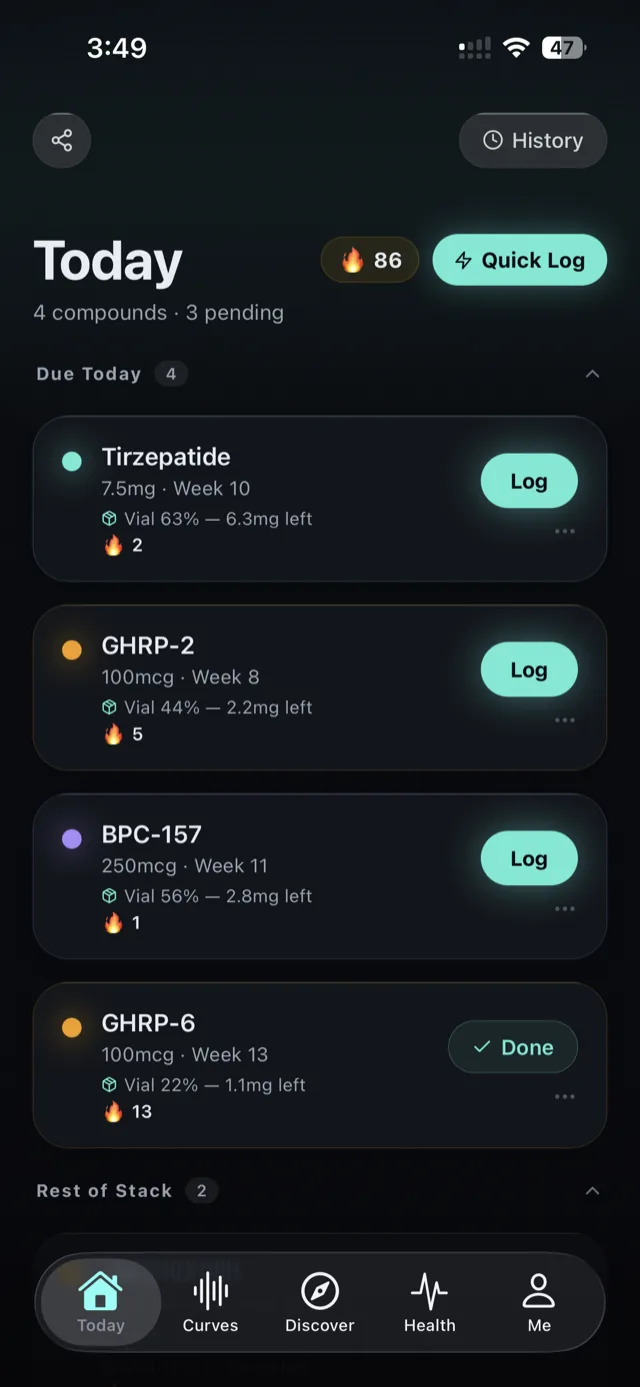
The six parts of a durable protocol record
Compound definition
Name, formulation, route, units, source, and evidence note.
Schedule version
Effective dates and revisions, so old plans are not overwritten.
Actual events
Completed, delayed, skipped, and corrected records with timestamps.
Supply records
Vial or product identity, starting amount, withdrawals, and remaining estimate.
Observations
Symptoms, weight, and notes kept separate from causal claims.
Model assumptions
Half-life source, route, formula version, and explicit limitations.
Why version history matters
If a changed plan overwrites the previous schedule, the record can no longer explain why an earlier event was considered on time or late. Preserve the plan that existed when the event occurred. A tracker should make correction possible without silently rewriting history.
A protocol tracker is an organizational tool
Halflife can make a complex record easier to inspect. It does not validate an unapproved compound, recommend a protocol, or determine whether a schedule is medically appropriate.
Product source: Halflife App Store listing. Evidence rules: Halflife Labs methodology.
Keep the complete record in one place
Halflife - Peptide & GLP-1 Log organizes logs, schedules, vial inventory, injection sites, symptoms, and clearly labeled model estimates on iPhone.
Download Halflife - Peptide & GLP-1 Log